A couple of months back, I began parallel publishing my blog here, and on wordpress.
I planned to use both for a while to see which would be more comfortable to use.
I also wanted to know whether the same content gets different traffic on different locations/environments - ie - blogger versus wordpress.
There was a difference:
1. Wordpress is far simpler to use, with most inputs being click, drag and drop. Including what I find most convenient - "open in new window" for links. In blogger, I needed to go into the html of each link and add the relevant code to open in new window.
2. I believe the new blogger (no more beta) has this function, and I can shift to the new look. But I believe I will lose all my customisations - links, counters, banners, etc and I would have to redo all of them in the new format. I don't have the time or energy to do that.
3. Tracking? Wordpress has a built in stat counter and traffic tracker, although quite basic. Since this is not a professional venture blog, basic stats are good enough for me. So score one more for wordpress.
4. Visitors? They're more or less the same on both locations - although search engines will rank my pages lower as they will discover duplicate content in two different locations (why? how? I'm not sure, but this is a fact I am told).
I now also have my own domain name http://www.noshtradamus.com/ so you can simply type that in (and bookmark it) to arrive at my blog.
At the moment you will automatically get redirected to my wordpress blog. Until I can figure out which specific software to use.
I'm just thinking aloud. I wrote it down, just in case it helps anyone out there who has a similar debate going on in your head!
.
Showing posts with label Debate. Show all posts
Showing posts with label Debate. Show all posts
Saturday, December 23, 2006

Fighting the "Keyhole View" of Advertising & Public Relations
When I "left advertising" last year, to "broaden my horizons and find new ways of communicating to the new world of consumers", most advertising folk I knew didn't have a clue as to what I was talking about.
Admittedly, even I wasn't sure what was out there, and what all I would have to learn (and unlearn), after being in the business of communication for 16 years!
The only thing I knew for sure, is that there is life beyond the 30 second TVC, the 100cc print ad, and the use of cricket instead of a real strategy.
I also knew that 'service industry' doesn't mean providing lip service, but means providing professionally thought out solutions the brand needs, not necessarily what the client personally wants.
In the 16 months since, I have quite literally gone back to school. Learning all about new consumers, new media, and new and exciting ways of communication.
I believe I have learn't a lot more 'new things' in the last 16 months, than I perhaps did in 16 years inside some of the largest agencies in the country!
Meanwhile my contemporaries in advertising, can at best describe my work as "doing his own thing" still not having a clue as to what I'm talking about.
Well, I am "doing my own thing", which is actually a combination of all of the above, plus and a lot more! Minus of course, the late nights, messy meal times, working weekends, and minus pandering to the egos of amateur 'professionals' and clueless 'know-it-alls'.
The last two categories above of course, make up the bulk of the business today, and unfortunately drive the perception of advertising.
So what drove me up the wall? What drives senior people like me and even much higher ups to either put up their hands and walk away in disgust, or set out on their own to try and do things the way they believe it should be done?
I believe, there are four things the advertising industry in general needs to address/lacks:
While these elements exist in clusters - among certain individuals, among certain agencies, and among certain clients - the numbers aren't enough, and don't have the critical mass to make a difference. At least, not yet.
PERCEPTION:
First and foremost, in order for our business to "grow up" and change the perceptions people have of us as 'overpaid, overhyped yarn spinners' we need to change our own perceptions about ourselves.
Yes, we have to stop reducing our importance by calling ourselves 'advertising professionals'. Or just 'PR professionals'. Because then we will be just that - a cog in the wheel of the overall marketing and communication machinery.
We need to see ourselves, and project ourselves, as overall strategic and communication professionals. And provide overall comprehensive solutions, which are unbiased by the kind of talent we have on our payroll, even if it means we have to find a third party to implement a program. (It's better to earn a referral fee, than earn a fee from something that isn't required in the first place).
I do believe advertising and public relations have to work together, not independently. It's apalling for me to think that most of the time the ad agency doesn't know what the PR firm is doing and vice versa for most shared clients. And you can forget them working together on a campaign!
The point is, when we can advise and recommend solutions to our clients, irrespective of whether we ourselves implement them or not, respect and trust for us will naturally grow.
PERSPECTIVE:
In order for the business to grow intellectually and effectively, rather than just financially, we definately need to broaden our perspectives.
We need to know more about the new age consumers, around new age media, and about the constantly emerging technologies that constantly change the aspirations, habits, and goal posts of both consumers and their media.
We need to have a perspective on these things today, as well as how it will and can evolve as soon as 3 months down the line, as well as a whole 2 years on.
Traditional SEC categorisation, TRP and Reach to my mind are just lame crutches of the intellectually challenged. And ass-covering excuses for mediocre performance.
We need to wake up to hits, eyeballs, word of mouth, peer to peer influencers, user generated media, and motivating factors beyond food, clothing and shelter.
We need to recognise that the internet, radio and peer to peer media are not "innovations" but a way of life today, and should be a part of every good communication program!
PLANNING:
It's amazing how unplanned our business it. Right from work flow within the office, to programs executed across audiences. Not surprisingly, we tend to be ad hoc and project demanded, rather than productivity driven.
With the right perspectives and perceptions (insights) we need to balance out current sales needs versus constant brand needs.
We need to plan, because quite simply as a studio manager used to tell us - if you fail to plan, you plan to fail.
This point is no rocket science, simply a reminder service :)
PROCESS:
This is usually the bane of every creative person, and account executive, and client. This is a "creative" business, isn't it? How can innovation be processed??
And how can we follow process when everything is needed yesterday?? Right?
Wrong! Because creativity and innovation are not something that will come fall in your lap. They are things that have to be pursued, nurtured and polished.
Creativity and Innovation are a science as well as an art.
And since there is no formal training, or text books for us in the business, each one of us comes with our own brand of thinking and way of working. Not surprisingly, we have the maximum issues around subjectivity, we keep the most bizarre working hours, and deadlines are like traffic lights on New Delhi roads - meant to be ignored.
Processes can help bring some order to our disorder, action instead of anarchy, and satisfaction of results instead of surrender to rubbish.
Process makes life easier - for those who know their jobs, and especially for those who don't. Don't fight process, harness it.
Processes also weed out the weeds in our fields of talent. A VP I once worked it, was a great proponent of 'chaos theory'. Only this was his cover for not knowing his job, not doing any work, and his inability to define roles and responsibilities. Chaos helped him pit people against people, and hence keep anyone from noticing that he was all crap!
So beware of those who fight process!
TO SUM UP:
If we as an industry don't want to be seen as 'narrow minded' and with "keyhole vision", we need to unlock our minds and open our doors to change.
We need to get out of our independent silos of advertising and public relations and discover how to blend the power of the two - where paid communication and unpaid-for hype work together.
We need to constantly and consistently find whatever it takes to give our clients greater impact. In whichever medium we think relevant. Targetting whoever we think is important, including those within client's organisations!
We need to aspire to a stage where we're not depreciated as a commoditised service provider, but instead appreciated as a specialist solutions partners.
Is that so hard to see?
Admittedly, even I wasn't sure what was out there, and what all I would have to learn (and unlearn), after being in the business of communication for 16 years!
The only thing I knew for sure, is that there is life beyond the 30 second TVC, the 100cc print ad, and the use of cricket instead of a real strategy.
I also knew that 'service industry' doesn't mean providing lip service, but means providing professionally thought out solutions the brand needs, not necessarily what the client personally wants.
In the 16 months since, I have quite literally gone back to school. Learning all about new consumers, new media, and new and exciting ways of communication.
I believe I have learn't a lot more 'new things' in the last 16 months, than I perhaps did in 16 years inside some of the largest agencies in the country!
Meanwhile my contemporaries in advertising, can at best describe my work as "doing his own thing" still not having a clue as to what I'm talking about.
- When I say I work with new media - the reaction is "oh, you make websites"
- When I say I am an independent consultant - they say "oh, you do freelance advertising"
- When I say I give clients a 360 degree perspective, it's "oh, you do below the line, DM and stuff??"
Well, I am "doing my own thing", which is actually a combination of all of the above, plus and a lot more! Minus of course, the late nights, messy meal times, working weekends, and minus pandering to the egos of amateur 'professionals' and clueless 'know-it-alls'.
The last two categories above of course, make up the bulk of the business today, and unfortunately drive the perception of advertising.
So what drove me up the wall? What drives senior people like me and even much higher ups to either put up their hands and walk away in disgust, or set out on their own to try and do things the way they believe it should be done?
I believe, there are four things the advertising industry in general needs to address/lacks:
- Perception
- Perspective
- Planning
- Processes
While these elements exist in clusters - among certain individuals, among certain agencies, and among certain clients - the numbers aren't enough, and don't have the critical mass to make a difference. At least, not yet.
PERCEPTION:
First and foremost, in order for our business to "grow up" and change the perceptions people have of us as 'overpaid, overhyped yarn spinners' we need to change our own perceptions about ourselves.
Yes, we have to stop reducing our importance by calling ourselves 'advertising professionals'. Or just 'PR professionals'. Because then we will be just that - a cog in the wheel of the overall marketing and communication machinery.
We need to see ourselves, and project ourselves, as overall strategic and communication professionals. And provide overall comprehensive solutions, which are unbiased by the kind of talent we have on our payroll, even if it means we have to find a third party to implement a program. (It's better to earn a referral fee, than earn a fee from something that isn't required in the first place).
I do believe advertising and public relations have to work together, not independently. It's apalling for me to think that most of the time the ad agency doesn't know what the PR firm is doing and vice versa for most shared clients. And you can forget them working together on a campaign!
The point is, when we can advise and recommend solutions to our clients, irrespective of whether we ourselves implement them or not, respect and trust for us will naturally grow.
PERSPECTIVE:
In order for the business to grow intellectually and effectively, rather than just financially, we definately need to broaden our perspectives.
We need to know more about the new age consumers, around new age media, and about the constantly emerging technologies that constantly change the aspirations, habits, and goal posts of both consumers and their media.
We need to have a perspective on these things today, as well as how it will and can evolve as soon as 3 months down the line, as well as a whole 2 years on.
Traditional SEC categorisation, TRP and Reach to my mind are just lame crutches of the intellectually challenged. And ass-covering excuses for mediocre performance.
We need to wake up to hits, eyeballs, word of mouth, peer to peer influencers, user generated media, and motivating factors beyond food, clothing and shelter.
We need to recognise that the internet, radio and peer to peer media are not "innovations" but a way of life today, and should be a part of every good communication program!
PLANNING:
It's amazing how unplanned our business it. Right from work flow within the office, to programs executed across audiences. Not surprisingly, we tend to be ad hoc and project demanded, rather than productivity driven.
With the right perspectives and perceptions (insights) we need to balance out current sales needs versus constant brand needs.
We need to plan, because quite simply as a studio manager used to tell us - if you fail to plan, you plan to fail.
This point is no rocket science, simply a reminder service :)
PROCESS:
This is usually the bane of every creative person, and account executive, and client. This is a "creative" business, isn't it? How can innovation be processed??
And how can we follow process when everything is needed yesterday?? Right?
Wrong! Because creativity and innovation are not something that will come fall in your lap. They are things that have to be pursued, nurtured and polished.
Creativity and Innovation are a science as well as an art.
And since there is no formal training, or text books for us in the business, each one of us comes with our own brand of thinking and way of working. Not surprisingly, we have the maximum issues around subjectivity, we keep the most bizarre working hours, and deadlines are like traffic lights on New Delhi roads - meant to be ignored.
Processes can help bring some order to our disorder, action instead of anarchy, and satisfaction of results instead of surrender to rubbish.
Process makes life easier - for those who know their jobs, and especially for those who don't. Don't fight process, harness it.
Processes also weed out the weeds in our fields of talent. A VP I once worked it, was a great proponent of 'chaos theory'. Only this was his cover for not knowing his job, not doing any work, and his inability to define roles and responsibilities. Chaos helped him pit people against people, and hence keep anyone from noticing that he was all crap!
So beware of those who fight process!
TO SUM UP:
If we as an industry don't want to be seen as 'narrow minded' and with "keyhole vision", we need to unlock our minds and open our doors to change.
We need to get out of our independent silos of advertising and public relations and discover how to blend the power of the two - where paid communication and unpaid-for hype work together.
We need to constantly and consistently find whatever it takes to give our clients greater impact. In whichever medium we think relevant. Targetting whoever we think is important, including those within client's organisations!
We need to aspire to a stage where we're not depreciated as a commoditised service provider, but instead appreciated as a specialist solutions partners.
Is that so hard to see?
Tuesday, November 14, 2006
David-Bates-Enterprise: Menage a trois or trouble?
I just received an sms alert from my friendly industry spammer, about a David-Bates-Enterprise merger. Yes, David, Bates, Enterprise... I've double checked the article it pointed to, and you can see for yourself.
For those of you who don't have the context of Indian advertising agencies - this is the wierdest merger anyone of us here can imagine! Because the three entities seem to have nothing in common!
The first union which took place a while back was a typical Indian arranged marriage - where some elders in their wisdom decided to get two very different people married, saying "we know what's best for you. Once you're married, you'll sort out your differences, make adjustments and create a good family. Love? What's love got to do with it? Once you're married, you'll learn to love each other in good time!"
So the two agencies - Bates and Enterprise - one a middle-class-generally-boring-boy of no particular lineage, married the hot-and-popular-westernised-babe from Mumbai.
Being a typical Indian marriage, the boy was put in charge, and the girl was expected to "adjust" and live up the the "new family name" of Bates Enterprise!
Not surprisingly, they had their internal issues (read ego problems) of adjustment, culture, priorities... the works! ...but like most Indian couples they are still living together!
Now along comes this dude David. Yes, david is another dude! Cool, clever, Fun, everything the middle-class boy (and now marriage) is not! David's been independent, standing up against the big boys in all areas (David vs Goliath in real advertising life!)
As a saving grace, his name seems to be the first in the title. The question is, will David's belief systems also get priority in the way they live? Will he get to call the shots, or will he have to quit being enterprising and step back with abated energy?!
I have nothing against each of the individual agencies - in fact I hold the leaders at the helm of each entitiy in high regard:
Mohammed Khan, in my mind is the guru of classy and cool advertising in India;
Subhash Kamath, a great servicing guy and leader to have for your team;
Josy Paul, the unassuming yet brilliant creative guy of contemporary Indian cool.
Each has the substance of a classic advertising person, as against the maverick flash-in-the-pans of today. But each is a name to reckon with, and a leader in his own right. Each has a following, and has nurtured a culture that is distinct from any other (and each other).
The basic question is, will this menage a trois of clashing cultures result in a fantastic threesome, or simply end up to be a menage a trouble?
I wouldn't bet any money on it. But with due regard for the three gentlemen mentioned above, I'd put a little money into a temple and pray for them.
God help you guys! My best wishes are with you.
.
Thursday, November 09, 2006
hero versus baap!
This is my second post in recent times on the automobile industry in India. While I talked about the superbike dilemma the last time, this time I want to share my thoughts on the actual - current battle of the bikes going on between the supposed hero number one, and whom I think is the real baap (hindi term, for big daddy) of two wheelers in India.
Let's leave names aside for the moment, because the point I want to make is not really about the two companies, but about how companies can go completely wrong if they don't think right, or get the right marketing advice. I want to talk about how belief systems, and individual styles can make or break a company. (And how on earth can anyone with millions of rupees to spend on marketing and advertising, not have this basic commonsense in place!?).
Enjoy the ride, this is how it is, with two companies in the same business:
- Both started out as family owned two wheeler manufacturers, long before liberalization appeared in the Indian lexicon.
- Both were owned and run by patriarchs, who were bloody good at making their products, and going about their business.
- Both were very successful, and respected by the industry.
Cut to: the last 5-7 years.
- One patriarch has handed over the reigns to his younger sons. One still keeps the reigns to himself.
- One hires professional marketing and advertising agencies which are "very different" in thinking from them. One hires a bunch of agencies that are "like minded".
- One gives its agencies a free hand and trusts their judgement. One makes every campaign a pitch between all its agencies.
- One company's agencies come out with fresh and new ideas. One company's agencies are always second guessing what the company wants, in order to get the business.
- One company has a variety of strong brands in its portfolio. One company is struggling to find variations of the one product promise it invented 20 years ago.
- One company is clearly a winner in consumer minds. One company is ahead in sales, but just about.
Who do you think will win in the long run and become the brand of the future?
Note 1: Thinking shown above, is standard equipment in a professional setup. The results of actual marketing efforts however, always depends on individual riding styles.
Note 2: I have no vested interests in either of the two companies. I have however competed against both in the distant past.
.
Monday, November 06, 2006
Talent & The Boss's Perspective
I received a couple of email (why email?? stop being shy, and post your comments, folks!! make this blog a little more interactive upfront) with regards to my previous post on Talent. In that post, I pointed out that problems within a company, can invariably be traced back to leadership, and bad bosses.
Most of those who wrote in, agreed with me and shared their own "boss experiences" (too explicit to print here). However I got the feeling, they assumed I was just out to trash "bosses" - which is far from what I had in mind, having been a "boss" myself for the last 10 years!
The fact is, I always took ownership of problems and tried to address them the best way I could - with inputs from my own bosses (thank you Abhinav, Nirvik, Arvind, Nitish, Sanjeev) and the people that worked under me (thanks Sam, Arun, Shikha, Suruchi, Partho...).
The truth is, I promise you, I always knew any problem within the team, was usually do to some action or inaction of mine, giving rise to my belief in the "Boss" theory.
At the same time, the influence of my own boss was strong in my own dealings with people (my no. 2 problem theory, coming soon)! I sometimes did or said things I wouldn't have done (good and bad) which weren't me!
So when they were angels, the sun shone out of my you know what, but where they ****ed with my mind for their own agenda - I ended up being a pain in the you know where!
Net Net, here are some do's and don'ts I learned along the way, which should be of great help to any Boss to read, and a great tool to judge the one above you!
Good Bosses Should:
Feel free to add to the list, by posting comments below (not by sending me email!)
.
Most of those who wrote in, agreed with me and shared their own "boss experiences" (too explicit to print here). However I got the feeling, they assumed I was just out to trash "bosses" - which is far from what I had in mind, having been a "boss" myself for the last 10 years!
The fact is, I always took ownership of problems and tried to address them the best way I could - with inputs from my own bosses (thank you Abhinav, Nirvik, Arvind, Nitish, Sanjeev) and the people that worked under me (thanks Sam, Arun, Shikha, Suruchi, Partho...).
The truth is, I promise you, I always knew any problem within the team, was usually do to some action or inaction of mine, giving rise to my belief in the "Boss" theory.
At the same time, the influence of my own boss was strong in my own dealings with people (my no. 2 problem theory, coming soon)! I sometimes did or said things I wouldn't have done (good and bad) which weren't me!
So when they were angels, the sun shone out of my you know what, but where they ****ed with my mind for their own agenda - I ended up being a pain in the you know where!
Net Net, here are some do's and don'ts I learned along the way, which should be of great help to any Boss to read, and a great tool to judge the one above you!
Good Bosses Should:
- Define Roles of everyone and respect their boundaries (if you want smooth functioning at all times)
- Speak Politely to everyone, irrespective of rank (being rude or gruff doesn't make you powerful, it makes you pathetic!)
- Always profile your teams and their experience with external customers (It assures customers of stature and solidity, rather than solo seconds from you)
- Encourage people below to learn your own job and what you do (how else will bosses move up to higher things?!)
- Don't ever use "I" in presentations, unless you're specifically asked for your personal opinion (experience tells us, most people who say "I did this" usually did not!)
- Don't snap fingers or use hand gestures to call or dismiss anyone (hand signals are for the physically challenged and traffic police)
- Don't encourage so called "harmless gossip" or any form of "backbiting" (if you show it's okay to bitch about others, you're licensing them to bitch about you!)
- Don't sleep with juniors, and certainly not with married ones (it ain't you buddy, it's the position - but then for many it is the only way, right??)
Feel free to add to the list, by posting comments below (not by sending me email!)
.
Thursday, November 02, 2006
Talent? What Talent!?

At the ICCO Global Summit 2006, one of the sessions was "Talent: Our Greatest Asset". The Speaker was Jeffrey Fuller of Mercer HR Consulting, and the Chairperson (though I expected him to do a session as Speaker) was Bill Rylance - Asia-Pacific President & CEO of PR firm Burson-Marsteller.
My homework on Jeffrey Fuller told me we'd get a great global perspective on talent issues and management. And that this talk will not only touch upon human insights, but be backed by logical, scientific thinking as well.
My homework was correct, I wasn't disappointed, and neither was the audience, by the sense I got in the hall. Jeffrey had covered most of the issues to do with talent.
Then Bill Rylance asked his first question. And gave the whole subject another angle, which may have been at the back of a lot of minds, but hadn't ever been put so bluntly before.
As masterful as he is known to be, Bill Rylance pulled an ace out of his perceptive hat, and kind of said "all this is very well, to take care of people and their issues - but how do you deal with the fact that more often than not the root cause of all the problems and issues facing a company, is actually a bad boss?!"
And with that single statement, he made a point that talent becomes irrelevant, when bosses become terrible!
A silent hush ran through the audience, and I am sure everyone thought of their own boss immediately, and how almost every problem they faced, could be traced back to him or her!
It is true, and I am sure you all agree that the culture, the emotions, the workstyle of an organisation all depends upon the management and the environment it creates.
Good management, can nurture people and create positive productive, healthy believers.
Slack management, can create confusion, promote laziness and lower productivity, and at best mediocre performance.
Terrible management, will create chaos, hostility, lowered production, and many clusters of discontent!
In my seventeen years, I have had the honour and privilege of working with some of the finest bosses in the country - Sajid Peerbhoy, Abhinav Dhar, Nakul Chopra, Nirvik Singh, Arvind Wable, Nitish Mukherjee and Sanjeev Bhargava are the ones I can thank for nurturing and helping me grow - emotionally, as well as intellectually. Sure, we had minor issues like in every relationship, but we're all still friends today.
And having not been obsessed with 'boss problems' of my own, I had the luxury of noticing other people's bosses around me - in different business divisions, in client offices, in partner agencies, and even boss's bosses! There were a few good ones I came across - Ravi Kant (Tata Motors), Anil Kapoor (FCB), Sanjeev Chaddha (Pepsi), Marise Kumar (Whirlpool) and Prema Sagar (Burson-Marsteller) are the ones I'd rank as great bosses and people to work with.
You can always get a sense from body language of Bosses, as to how good or bad they'll be. As well as know from the body language of those around them. Relaxed and good people, always have relaxed and good people around them - and together they do a great job growing themselves, growing their companies.
So while we must do all we can to manage our people well like Jeffrey suggested, the fact is as Bill pointed out - if we really want to do justice to our talent, we need to begin at the top!
.
Monday, October 30, 2006
50 Cent(s) worth of advice for communication pros!
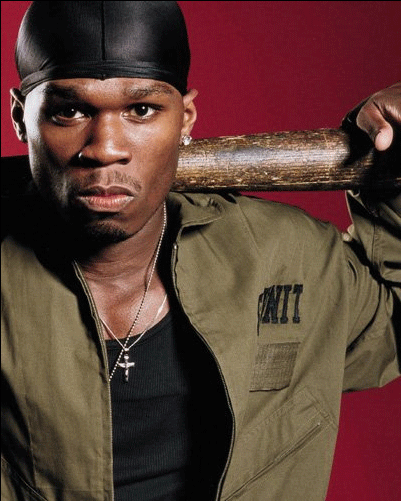 What can marketing and communication professionals learn from hip hop / rap artists like 50 Cent, Eminem, LL Cool J, and Snoop Dogg?
Well to begin, let's do a quick summary of what we know about rap and hip hop music:
1. The artists are aggressive, strong, and have hordes of die hard followers.
2. The music is powerful, addictive, and has hardcore followers.
3. The lyrics are single-minded, insightful, and hit the spot bang on with their followers.
Now take a parallel of good brands, companies and people.
Aren't they driven by strong leadership, have a powerful presence in their markets, are insightful about their consumers, single-minded in their messaging, addictive in consumption, and attract hordes of followers wherever they go?
While this holds true for most musicians and rock stars, why am I tuning in to these (er) gentlemen?
Well there's something about hip hop artists that makes them more powerful and addictive than most other types of musicians - especially when it comes to getting insights for brand building in the new world consumer order.
And by new world consumer order, I mean a consumer audience that lives life in the extremely fast lane, has extremely fleeting loyaltly (if it can be called that), is extremely demanding, and extremely difficult to define in conventional terms.
When you (attempt to) analyse hip hop, you'll find the aura is all in the body language, in the confidence, and in the stories these hip hop artists tell.
The stance, the eye contact, the hand movement, the baring of the teeth, the overall body movement akin to that of a modern day street fighter cum classical boxer - is all about an aggressive statement of individuality.
The oversize clothes, the overdose of overpowering jewellery, the overpimped wheels - are all about standing out and projecting stature.
The sexual under and overcurrents, the good 'good guy' and good 'bad guy' stories, the in-your-face uncensored language, the repetitive first person lyrics - are all insightful and typical of the new age consumer.
Trust me, or simply look around you, and tell me it's not true!
You'll also realise this trend/attraction/insight goes beyond the prime band of 18 to 28 year old male!
It encompasses the 13 year old girl who lives an Georgia, USA as well as the 15 year old in Gurgaon, India; The 37 year old DMF in Memphis, and the 37 year old BCG Consultant in Mumbai - they're all hooked onto a diet of Black Eyed Peas, live an LL Cool J life, and spend their millions on 50 Cent.
Think about it. Take a stance. Show me your finger. Or thankfully kiss my *ss for this wake up call! Because this is a part of the new world bro' and you gotta get jiggy widit - and if you can't rap the talk, you ain't gonna walk no walk!
.
Friday, October 27, 2006
Happy To Be Stuck With You!
What is it that makes people stick to companies? What makes companies stick to each other? What makes countries friends with each other?
Different people will give different reasons and opinions. Some will point to money, similar goals, and common business interests. Another lot would even say language and religion.
As primitive as it may sound, but the latter is usually closer to the truth. Because more often than not, what brings and holds people, companies and even countries together is something broader, but more basic – culture.
While you may unanimously agree that cultures bring and hold people and countries together, you may not have looked at it from the organization perspective, would you?
I often hear people complain about their jobs, their bosses, even the industry within which they work. While the debate and angst may revolve around issues like ego, money, hours, whatever… the point I always say to them is:
1) “Forget these issues for the moment – do you feel that you and your boss/company/industry are culturally matched?
2) Do you have the same set of values and belief systems?
3) If you do have similar values, you should talk about these issues, fight for them, or even wait for them to blow over.
4) But if you find your values and culture do not match – get the hell out of there!”
It’s as simple as that – and this applies to Bosses, Companies, Clients, even Customers.
- How can an organized, polite person work under a chaotic, aggressive boss?
- How can people who believe in honesty and integrity work for companies that hussle and push people?
- How can hierarchy and process driven companies work with companies driven by chaos and lack of role definition?
It’s the basic funda of marketing – you pitch and connect with people with related interests.
The above are just examples of different values and cultures. You can choose any parameters that are really important to you, and then compare them with the parameters and values that are very important to your bosses, companies and clients.
So, now are you keeping your current job and client list? Or do we see a change in the near future?
Next Practices - Bottom Up!
 Before the ICCO Global Summit 2006, many people were looking forward to Yann Risz speak about “Next Practices” (see link)… And many women were looking forward to meeting Yann Risz in person (see accompanying pic)…
While the women weren’t disappointed by Yann, some people were confused by his session.
I am not going to get into the what the women liked, but I would like to comment on the Session.
Most people got carried away by the title of the Session and the theme of the Summit, and were perhaps looking for fireworks in terms of new tools and technologies from Yann.
But if only those who complained had read the synopsis of Yann’s session, they would have realized that he delivered what he promised – which is a killer opportunity in its own right, however “unglamorous” it may look and sound.
Yann Risz talked of ‘bottom of the pyramid’ consumers (which many “elitist” brands/agencies pooh-paah), and how companies can address and alleviate their social and economic issues, while creating relevant business opportunities for themselves.
Unfortunately, the Q and A session got waylaid by self righteous and so called “politically correct” questions like “oh how can you take advantage of economically disadvantaged people” – while the questioners completely missed the point that these companies were creating mutual wealth, and attempting to raise the basic standard of living at the bottom of the pyramid.
I doubt anyone can question the motives of Yann’s first example - ITCs e-choupal and the positive change it has brought to the landscape of rural India. And while I personally believe his other example, ICICI Bank, is stretching itself thin when providing low cost, low value finance across the country, and will have a tough time sustaining this promise in the long run. Where’s the profit in that!?
As Jairam Ramesh, Minister of State for Commerce, Government of India pointed out later in the Summit – “while countries like India and China will certainly become global economic super powers in the macro sense, the per capita income will still be very low, with the average citizen still struggling to make two ends meet.”
And as Yann pointed out – this ‘average bottom of the pyramid citizen’ is going to be a huge chunk of consumer; a very large audience which we will also have to address – if we’re to survive and thrive, in the next generation economy.
Tuesday, October 17, 2006
Comsuming Online "Ban"ter
What's with many governments and authorities, and their constant threats and attempts to ban free speech online? The stated reason is always "national interest".
Of course, the usual public outcry and debate is about what really constitutes national interest - the interests of those who power the nation, or those who actually make up the nation?
The fact remains that such bans have never really helped nations improve security, or even stop terrorist or communal forces from doing their evil (in India, we're a target of both).
All these bans do, are drive the rot below the surface, to rear its ugly head in the most unexpected places.
The only people that actually get stopped are the innocent bystanders on the digital highway, who have nothing to do with terror, but become a victim to arbitrary authoritarian actions like bans.
Instead why not let the 'so called offenders' stay in public view, ranting and raving about what they think is right and wrong? Why not let them continue their 'offences' in the belief that they're invincible or whatever?
What they will do is expose themselves, give us an idea of who's saying what, and help intelligence and police forces watch out for signals of an impending trouble...
Look at the United States of America, for example. They probably have the greatest record of free speech and expression in the world. Their people can say or do things in the context of their government and national symbols, which would get me arrested in many countries, if I even mention them here!
But the US intelligence system I believe monitors and tracks these 'posts' and 'trends' - playing the wait and watch game, more often than not nipping any trouble in the bud, before it can bloom.
It is one of the most important lessons for warfare - "Know your enemy".
Is that so hard to digest?
Friday, December 02, 2005
Youth v/s Experience - What gets the creative juices flowing?
There was an interesting debate in the Times of India sometime back, about whether creativity flourishes best during youth, or with experience?
The Times View was that genius thrives at an advanced age, with examples of how Isaac Newton, Da Vinci, Beethoven and Archimedes were all over forty years old when their ‘Eureka moment’ happened.
But in a counter view by Himani Dalmia, she put forth the fact that Einstein, Picasso and Mozart were toddlers in comparison when hitting the ‘Big E’ moment. She supported the theory with facts like kids use 80% of their creative potential at age 5, but this drops to 2% [which is also the average usage of an adult brain] by age 12!
You want to know what I think? And how this debate relates to advertising agencies in India? Read about it here >>
Subscribe to:
Posts (Atom)